

Lost in Translation: The Evolution of Utility-Produced Mapping
Lost in Translation: The Evolution of Utility-Produced Mapping
There was a time when a utility company representative would show up to a construction site, unroll a drawing, and tell a crew exactly what was underground, including depth, material, ownership, and condition. Not an estimate. Not “somewhere in this corridor.” Precise, verified information with little room left for interpretation.
That level of confidence came from dedicated in-house survey departments—teams within utility companies who maintained detailed field records, updated them consistently, and treated accurate documentation as an essential part of utility operations.
Over the past few decades, modernization and evolving business models changed that structure. Many of those internal departments were phased out, replaced by digital systems and outsourced workflows. But the expertise itself did not disappear. It shifted to specialized firms that now perform the same field-intensive work those utility crews once handled internally, combining modern technology with the practical knowledge required to accurately map and manage underground infrastructure.
The Era of the Utility Survey Department
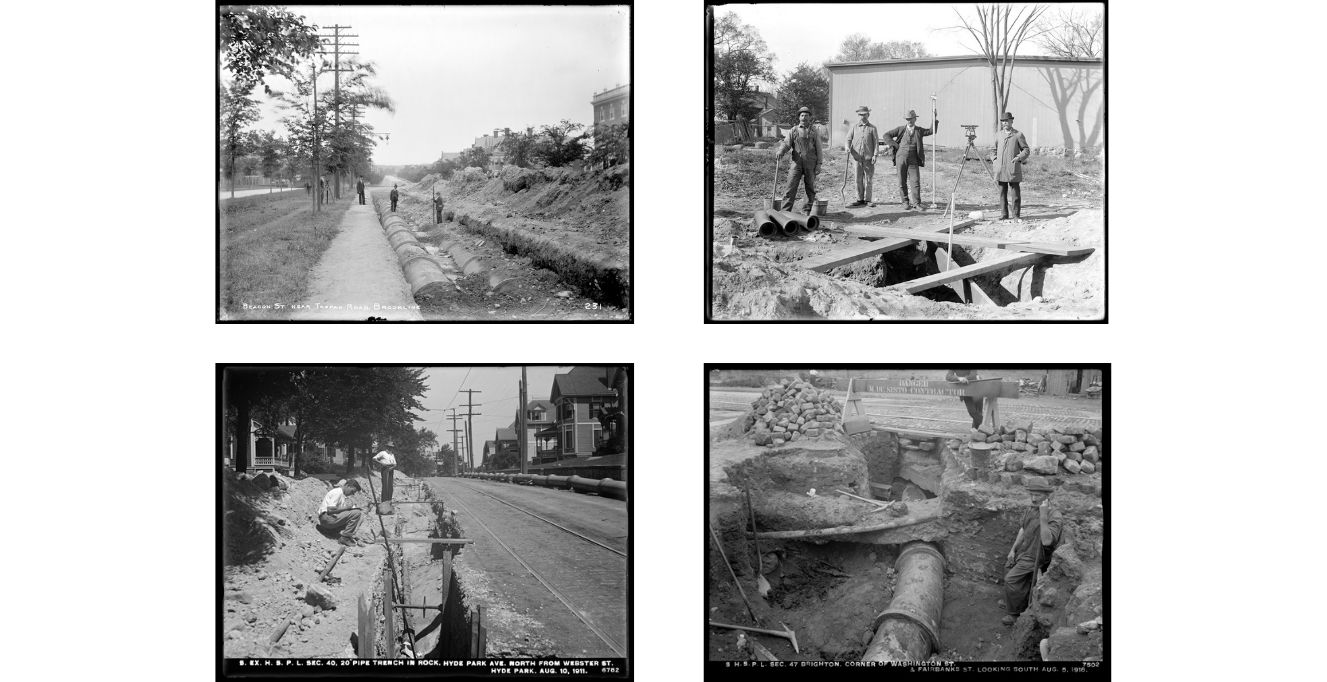
In the late 1800s, American cities saw a dramatic acceleration in the build-out of underground utility infrastructure to meet growing urban populations. Gas, water, sewer, electrical, and telecommunications systems expanded rapidly, and by the early twentieth century, major utility companies had dedicated surveying departments to keep pace with tracking what they’d built.
The Edison Electric Illuminating Company of Boston, also known as Boston Edison Company, is one of the clearest examples of this business model. The company developed what were known as T plans: a comprehensive set of detailed roll drawings covering street by street across the metro Boston area, named for the tubes these elongated plans are rolled into. Each plan was maintained by Edison’s own survey department, updated as the network expanded, and drawn to a scale and level of detail that captured not just their electrical and steam infrastructure but often the locations of systems owned by neighboring utilities. These rolls were living documents, not static snapshots, with some exceeding ten feet in length.
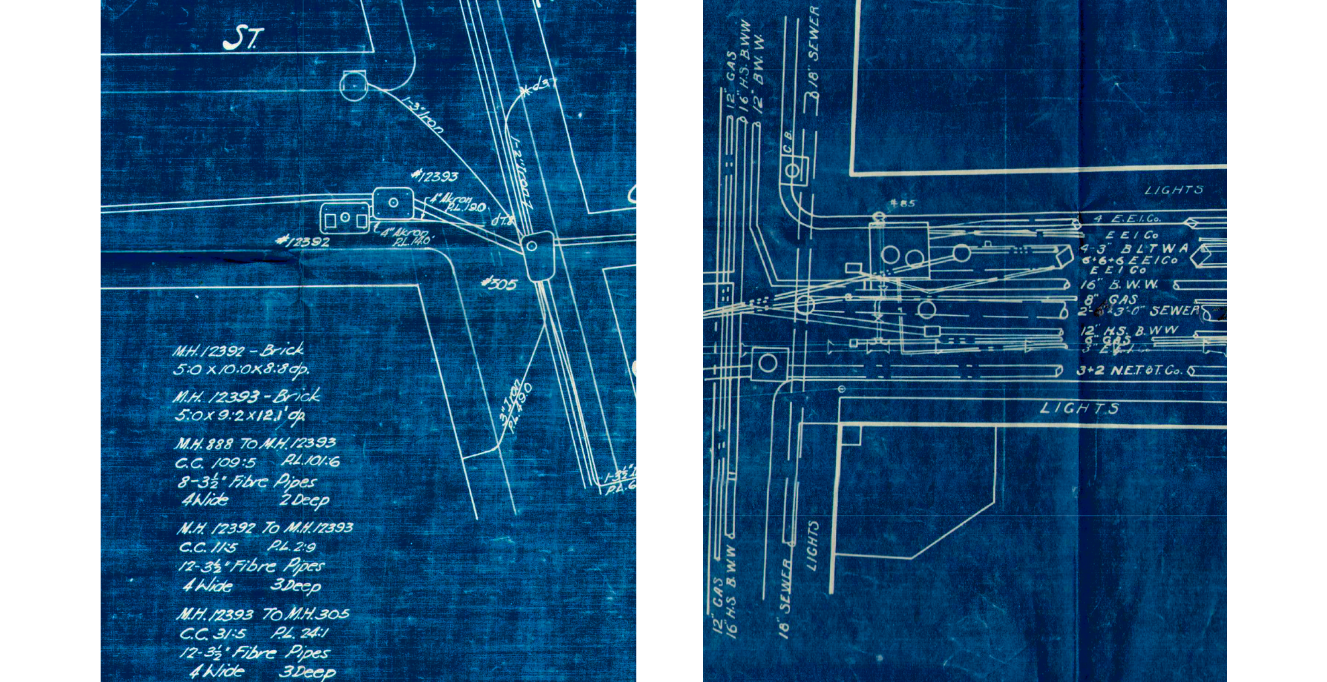
T plans were essential to the work of engineers and contractors, and utility representatives would often arrive at a job site with one of these drawings and use it to walk a crew through everything underground before work began. The maps were detailed enough to safely support this process as a standard practice.
Across the industry, utility companies with strong survey departments produced records that reflected high quality, authentic field work—post-construction surveys, periodic updates, careful annotation of depths and materials. When the 1895 construction of Boston’s (and America’s) first subway required engineers to work through corridors already packed with decades of infrastructure, the project team treated subsurface mapping as seriously as any other phase of the work. The records that effort produced remained useful for generations.
The Transition Away from Internal Field Crews
Beginning in the 1980s and continuing through the 1990s and 2000s, utility companies began reevaluating the cost of maintaining internal survey departments. At the same time, GIS platforms and digital record-keeping systems were becoming standard across industries. From an operational perspective, consolidating or eliminating dedicated field crews seemed more efficient and cost effective. The goal was to create a single digital system that could be updated centrally, shared across departments, and accessed easily throughout the organization.
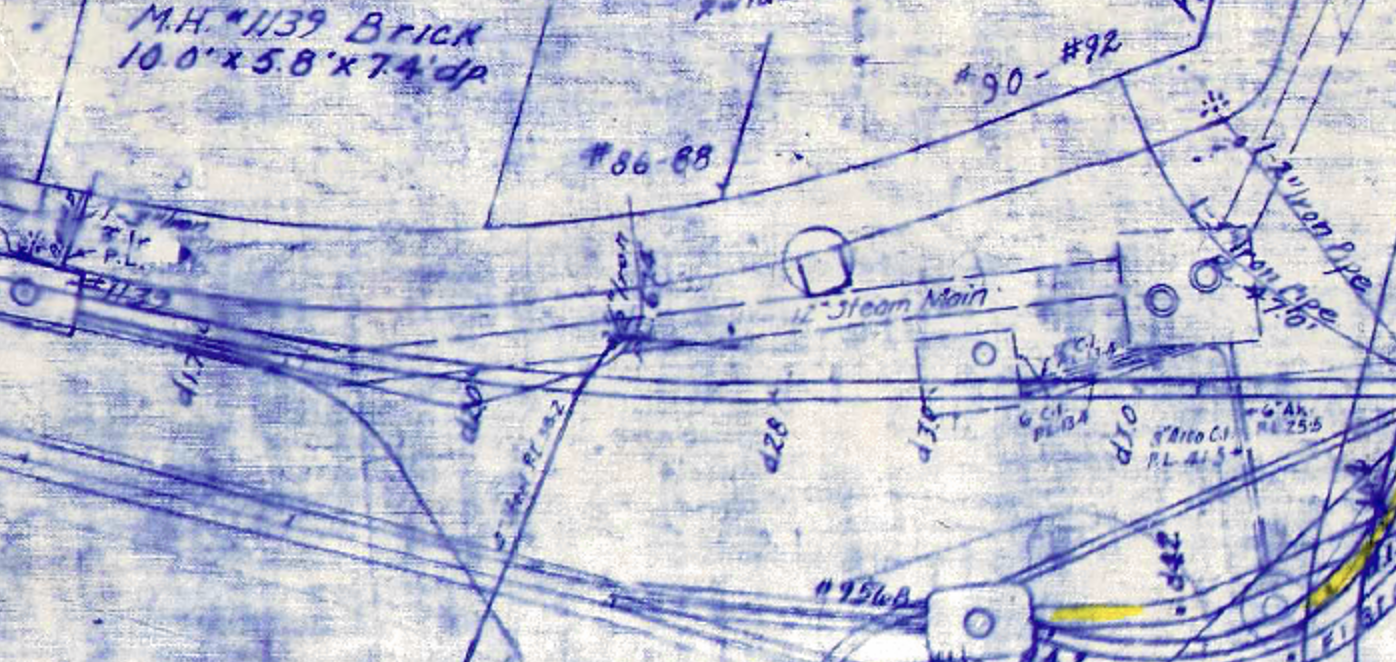
What was overlooked, however, was how the original data had been created and maintained. The accuracy of older utility records depended on trained field personnel collecting and documenting information directly in the field. They recorded surveyed locations, depth measurements, material types, and, just as importantly, distinguished between verified information and estimates. That level of detail required both technical expertise and ongoing field verification. As many of those in-house survey teams disappeared, utilities also lost much of the institutional knowledge and field capability needed to maintain records at the same standard.
During early digitization efforts, many utilities converted decades of paper records into GIS databases and digital base maps. But these conversions were often focused on accessibility and operational efficiency rather than preserving the full precision of the original records. Detailed roll plans containing surveyed positions, depth annotations, and field notes were frequently simplified into basic linework. In many cases, once the information was digitized, the original paper records were discarded.
GIS platforms themselves are not the problem. They are highly effective tools for managing network assets, coordinating maintenance, and distributing information across large organizations. But the reliability of any GIS system depends entirely on the quality of the underlying data.
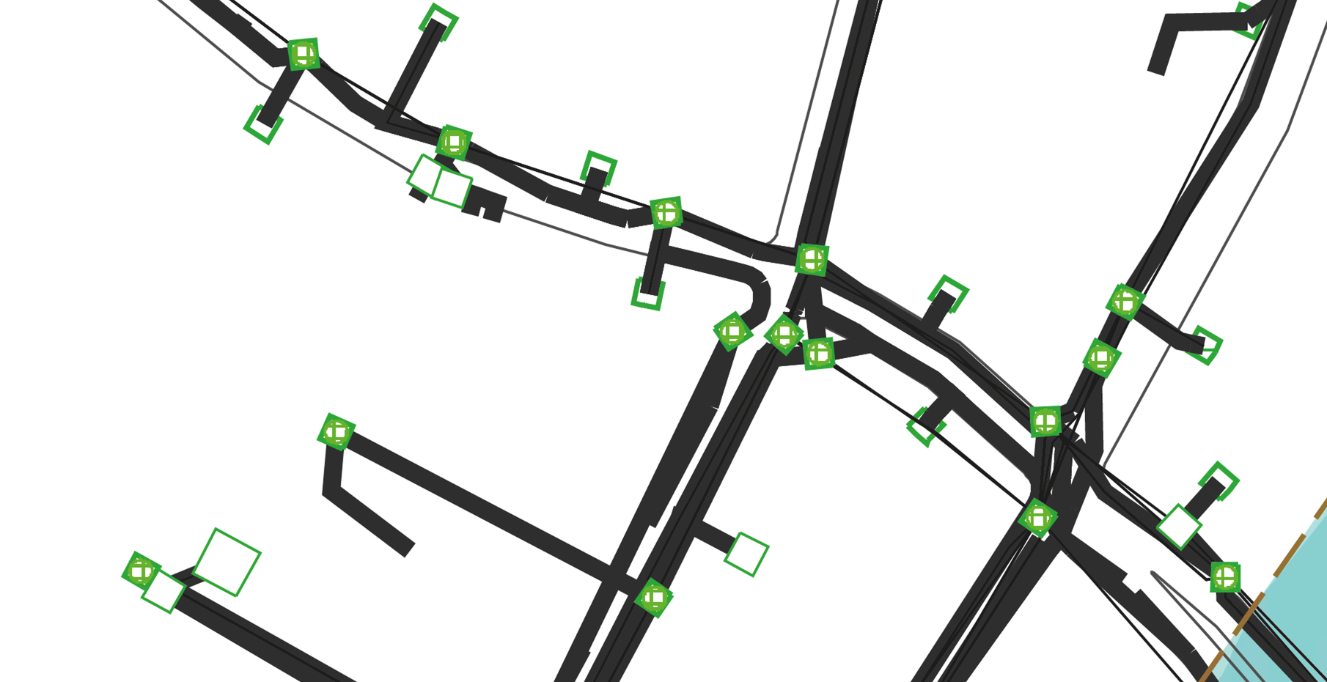
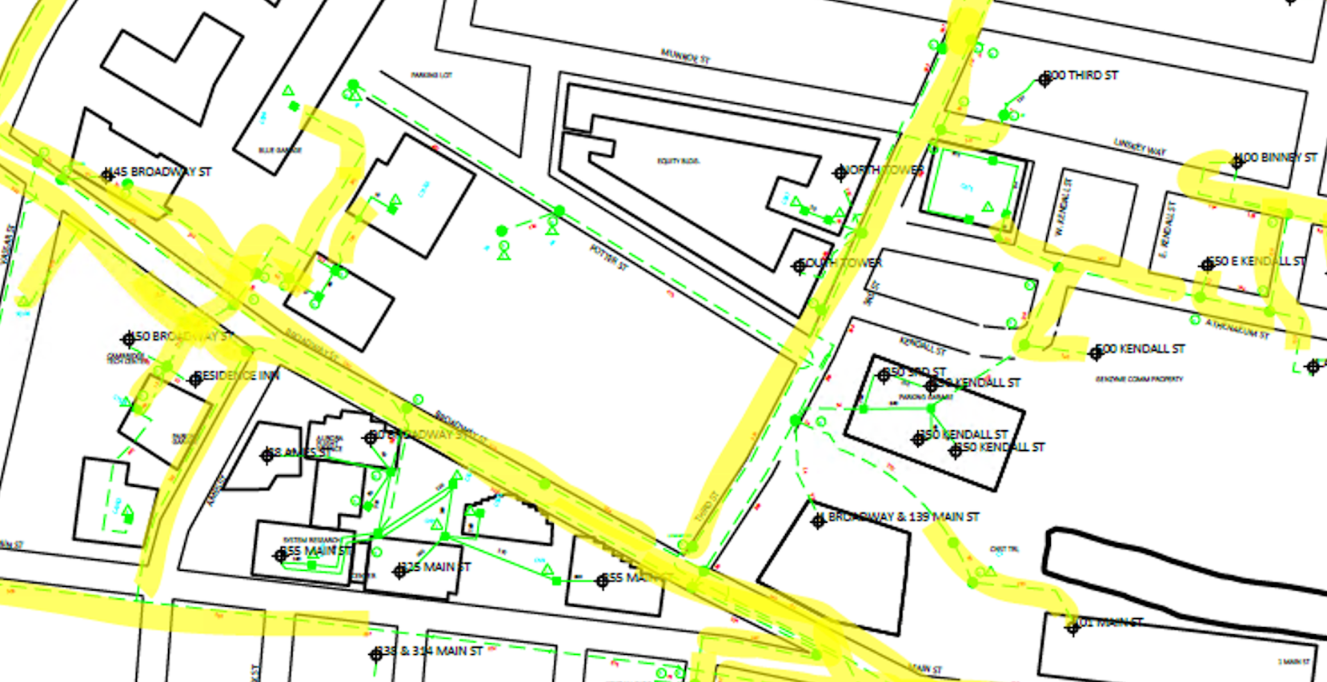
Without dedicated field verification and with much of the original detail lost during digitization, many utility records no longer reflect the level of accuracy that earlier roll plans once provided. As a result, when project teams request utility information for a design corridor today, they often receive static PDFs or digital exports that provide little context about how a feature location was established, when it was last verified, or whether the information represents surveyed data or a historical approximation.
Filling the Knowledge Gap
The downstream effect of this is visible in how projects get set up today. When contractors call 811 before breaking ground, the markings that go on the pavement are only as good as the records behind them. As those records have lost the field-verified detail they once had, the gap between what gets marked and what’s actually underground has widened.
Luckily, the expertise that utility companies once kept in-house now lives in firms like DGT, who bring together legacy archives, highly trained field crews, and advanced remote sensing technologies to produce the kind of verified, detailed subsurface records the industry still depends on.
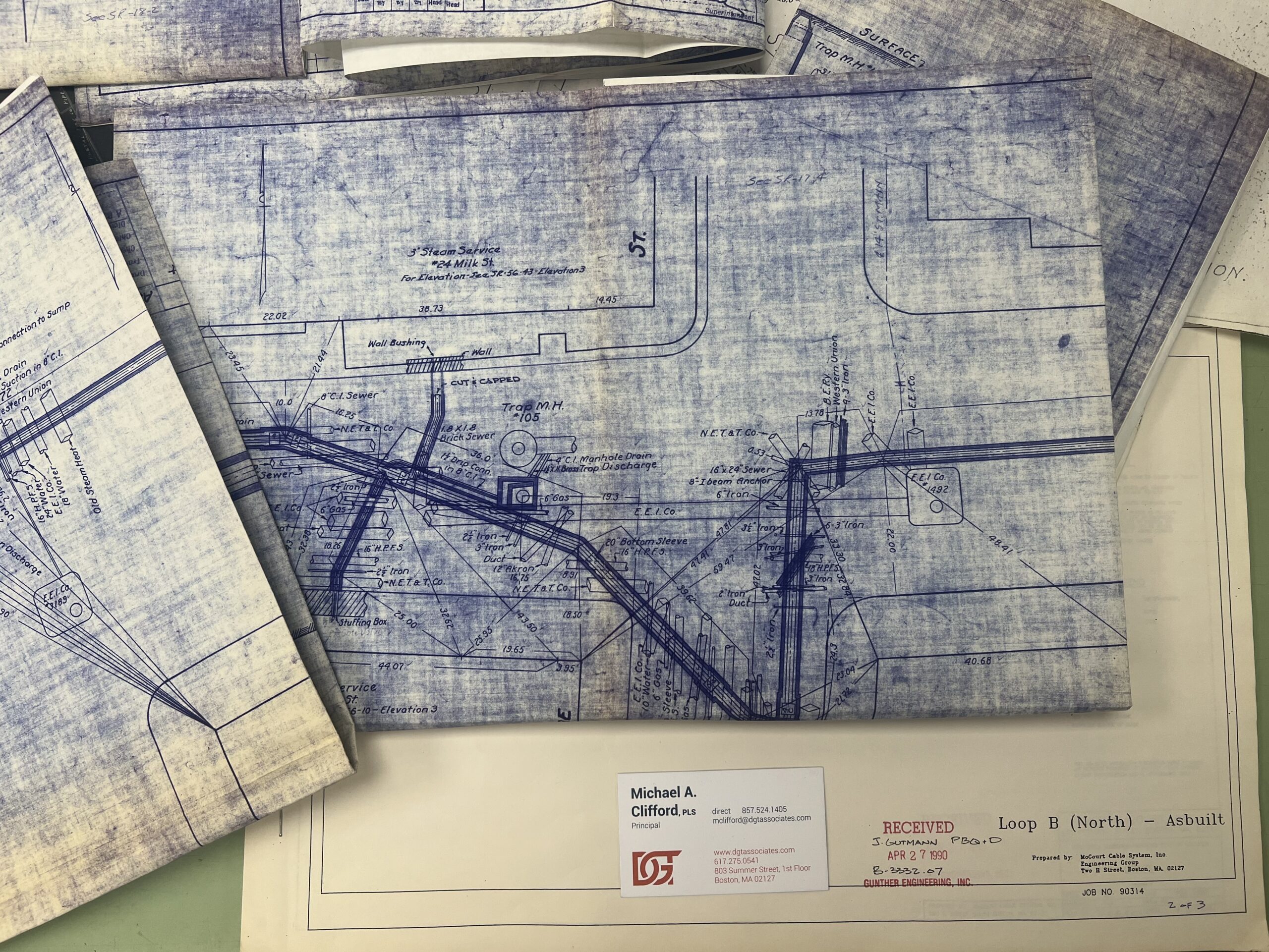

Through decades of predecessor firm acquisitions, including Gunther Engineering, Schofield Brothers, Cullinan Engineering, and others with histories stretching back to the late 1800s, DGT has maintained an extensive, searchable library of historical plans and records that exist nowhere else. In areas with long construction histories, that material regularly surfaces details that no current utility database can provide. That institutional knowledge didn’t disappear. It just moved.
For everything those records don’t cover, field work does. Using ground-penetrating radar, electromagnetic line detection, radar tomography, and other remote sensing technologies, DGT’s teams produce georeferenced, three-dimensional documentation that validates existing records and fills in what they miss, giving project teams a complete, reliable picture of what’s in the ground before work begins.
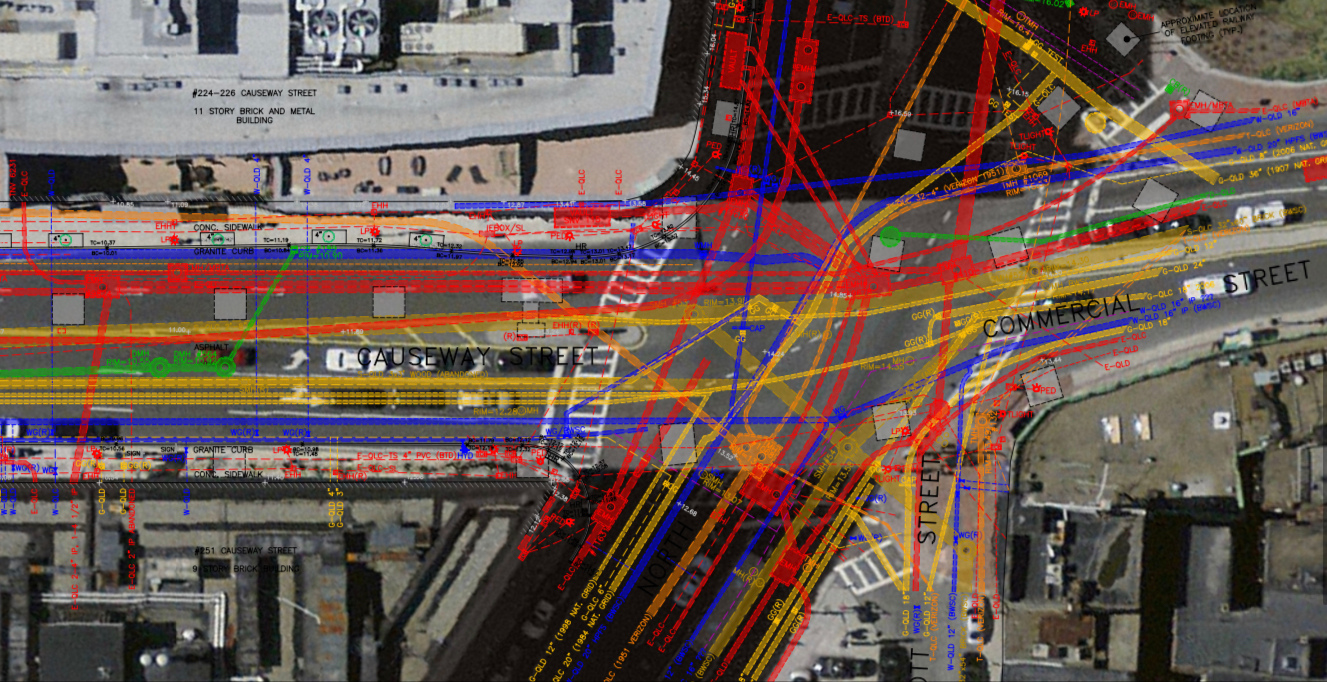
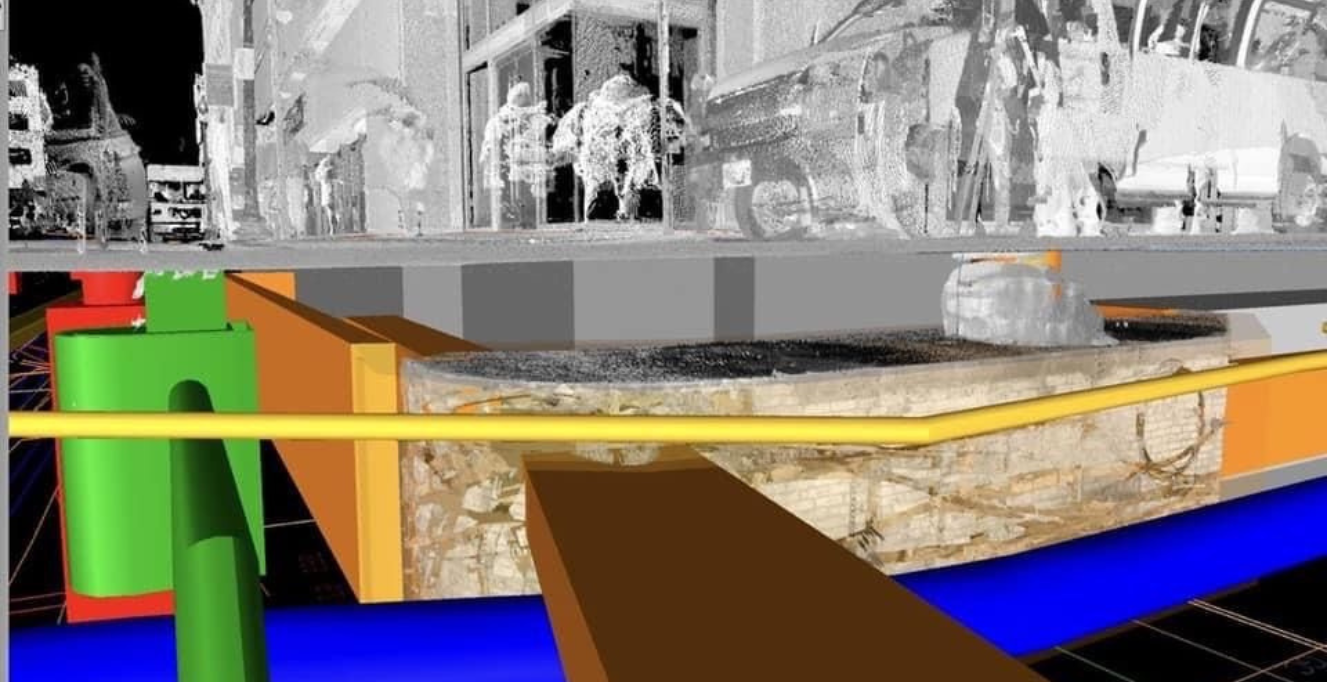
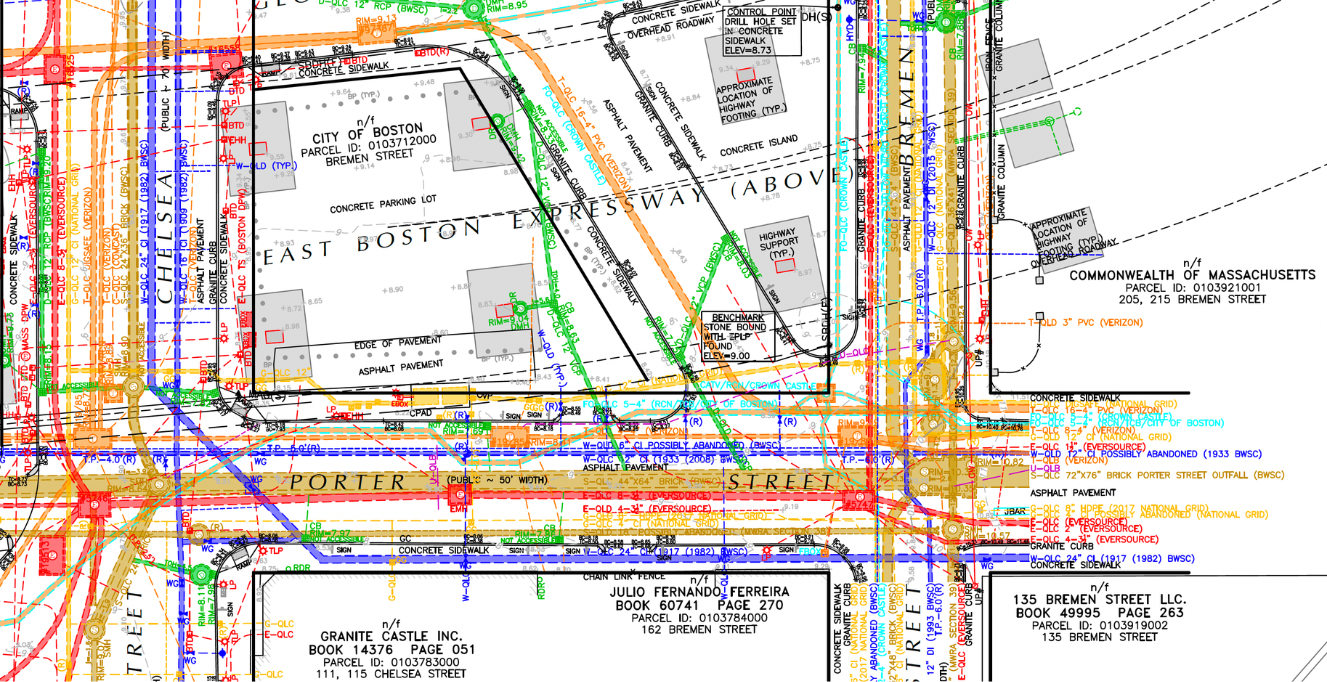
While the tools and workflows of the industry have changed considerably over the past century, the importance of accurate, detailed subsurface records has never wavered. Learn more about DGT’s subsurface utility mapping services.