

Infill Development Is Thriving—On Top of Some of the Most Complicated Subsurface Conditions
Infill Development Is Thriving—On Top of Some of the Most Complicated Subsurface Conditions
To meet the infrastructure needs of a growing community, from housing and storefronts to offices and hospitality, infill development has become a dominant growth strategy across the Greater Boston Area and beyond. Rather than expanding outward into undeveloped land, infill development targets underutilized or vacant spaces within already built-out areas, most frequently taking the form of parking lots, empty lots between existing buildings, or other gaps in the urban fabric. The appeal is practical: the land is already there, zoned, and served by existing roads and utilities.
The strategy has also gained traction as a tool for addressing a broader set of urban priorities. Denser, transit-proximate infill can reduce car dependency, lower per-capita infrastructure costs, and help cities hit climate and sustainability targets by concentrating growth where services already exist. It’s a model that aligns developer incentives with municipal goals, which is part of why it’s accelerating.
And increasingly, it’s not just private developers driving the push. In 2021, Boston Mayor Michelle Wu launched an initiative to leverage the city’s land portfolio to expand housing capacity and help address the region’s acute housing shortage. A Citywide Land Audit identified nearly 1,240 vacant city-owned parcels and flagged parking lot conversions and underutilized municipal properties as key opportunities for new infill affordable housing.
The momentum behind infill is well founded. But the same characteristics that make these sites attractive—dense urban cores, layered development history, existing infrastructure—are exactly what make them complicated below the surface.
Why Infill Sites Are More Complicated Than They Look
Infill sites in established urban or suburban areas may appear vacant, but they still have a history, sometimes spanning multiple eras of construction and demolition, each one likely leaving a subsurface surprise behind. Abandoned foundations, decommissioned utility runs, old railroad lines, and buried debris are common on sites that have cycled through previous uses. At the same time, municipal water, sewer, gas, electric, telecom, and fiber networks converge most densely in exactly the places where infill development is most attractive: established neighborhood centers where existing demand is highest and land is most scarce.
Compounding the problem, utility records are often incomplete, contradictory, or decades out of date. In older New England cities and towns, it’s not unusual for a sewer line’s as-built drawings to predate the last two reconstructions of the road above it. The result is a subsurface environment where conflict between new construction and existing infrastructure is the norm, not the exception.
Since the surface of an infill site often appears untouched, it can be easy for project owners to underestimate the simplicity of the underground environment beneath it. This gap between assumption and reality tends to be where budgets and schedules break down.
How SUM Turns Subsurface Uncertainty into Reliable Data
Subsurface Utility Mapping (SUM) is a systematic process for identifying, locating, and characterizing underground utilities at escalating levels of certainty, from records research and non-invasive geophysical detection to physical verification through test holes. The findings are then converted into accurate, georeferenced maps of what exists below the surface, giving the design team reliable data on utility locations, depths, sizes, and conditions to work from before critical decisions are made.
The most effective time to initiate this work is early in design, during site evaluation and concept development. Subsurface investigations at that stage can flag conflicts that shape the project in productive ways, while the design is still fluid and changes carry no significant cost penalty. It gives the development team a structured, defensible picture of what’s below ground before the architect finalizes the building footprint, before the civil engineer locks the grading plan, the permitting is complete, and financing closes on a budget built around assumptions that haven’t been tested.
Waiting until construction is underway compresses options and inflates costs if surprise discoveries are encountered. Utility relocations require coordination with utility owners—often on the asset owners’ timelines—and last-minute rescheduling can carry significant financial consequences. Those consequences are amplified on infill projects, which tend to involve higher land basis, tighter financing structures, and a more demanding municipal review process. On public-benefit projects like affordable housing, the stakes are higher still, with tighter budgets, funding sources that are less forgiving of cost overruns, and schedule delays that can jeopardize tax credit allocations or grant deadlines.
SUM in Action: Bunker Hill Community College, Charlestown
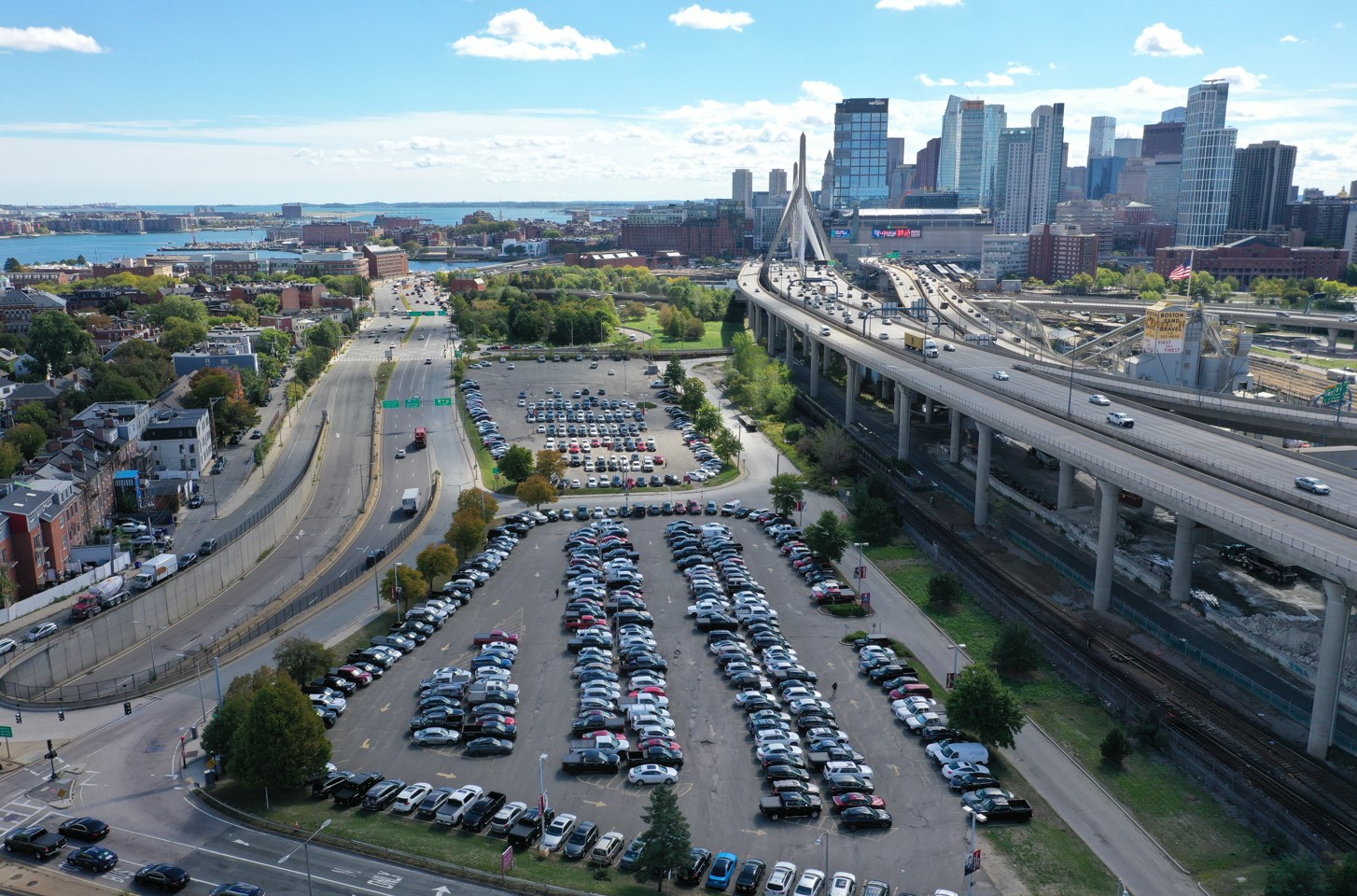
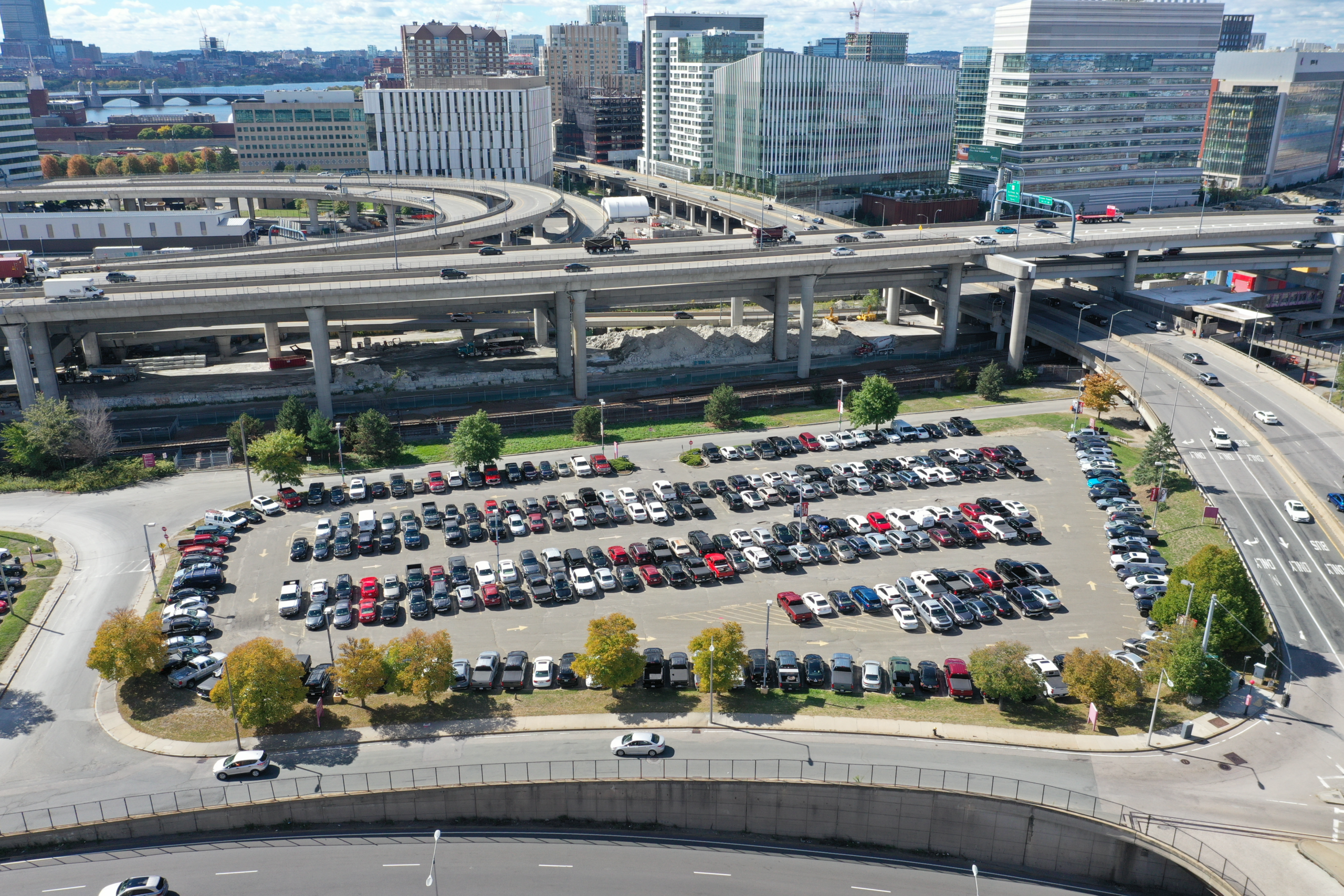
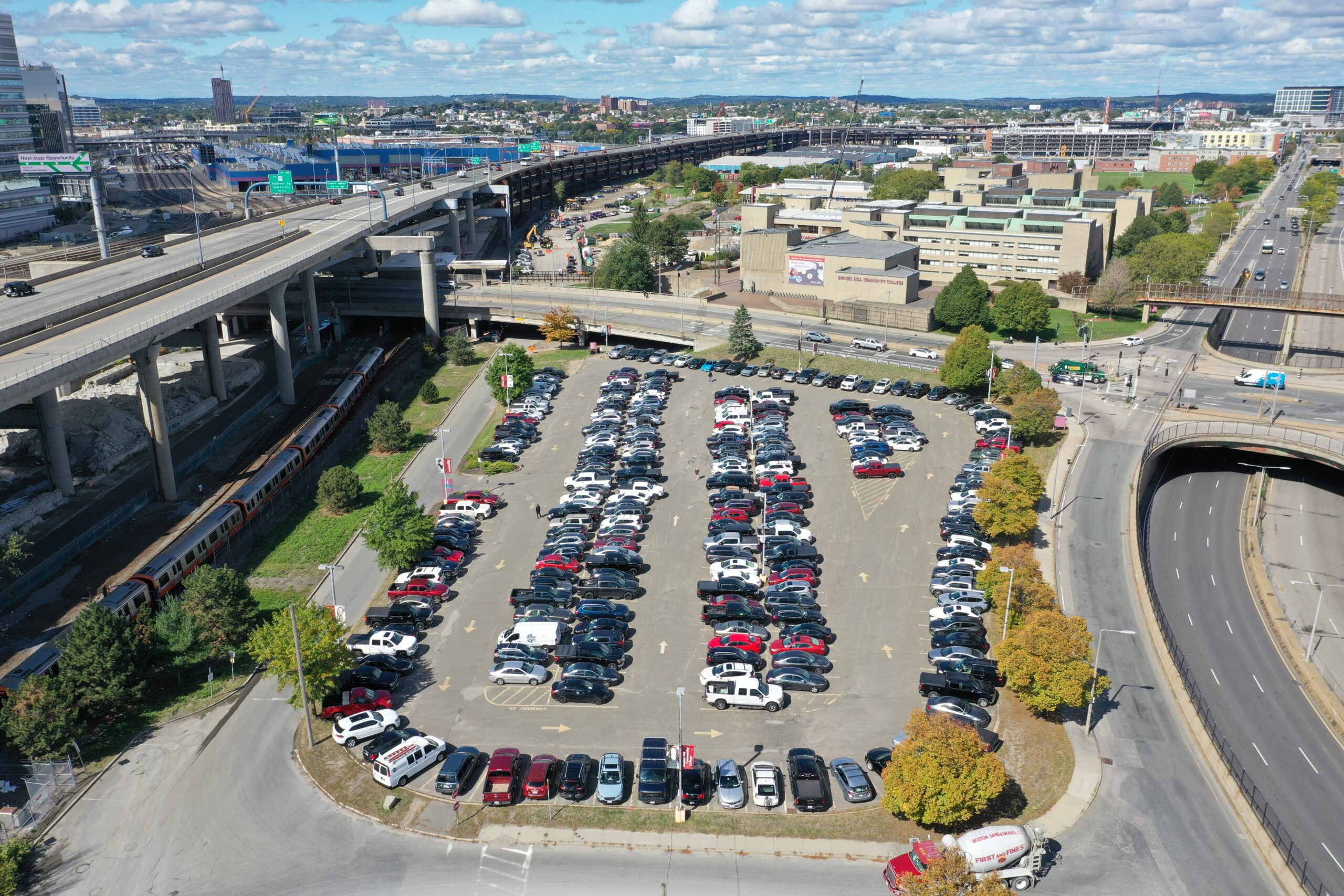
As part of Mayor Wu’s Boston-owned land initiative, DGT provided subsurface utility investigation services at several city-owned sites, including the Bunker Hill Community College Parking Lots in Charlestown. The site spans 216,172 square feet and sits at the northern gateway to Central Boston. Its history reflects the area’s broader transformation: originally developed as rail yards for the Boston and Maine Railroad, the land was reshaped through the automobile era, the realignment of Rutherford Avenue, and the 1990s Central Artery/Tunnel project, which carved the parcels into their current configuration. By the time the site was being evaluated for new housing, it carried layers of infrastructure from each of those eras. DGT conducted a subsurface utility investigation of the site, mapping critical utility crossings and giving the project team a reliable foundation to build from.
Underground Insight, Above-Ground Results
As infill development continues to be a central tool for addressing the region’s housing and commercial space needs, it’s essential that these projects engage a utility mapping professional before it becomes a constraint the project has to work around rather than a condition it was designed to handle.
Underground insight gives project owners and design teams the information they need to make confident decisions about what’s possible above it. DGT’s combination of advanced detection technology and experienced field teams transforms an uncertain subsurface environment into clear, reliable data. No matter how layered the site’s history or how incomplete the existing records, a thorough subsurface investigation ensures that the full picture is visible before it becomes a problem, ensuring safety and efficiency.
Learn more about our SUM service offerings.