

Before the Point Cloud: How DGT Became an Early Pioneer in 3D Laser Scanning
Before the Point Cloud: How DGT Became an Early Pioneer in 3D Laser Scanning
In the early 2000s, 3D laser scanning was emerging as one of the most transformative technologies in modern surveying. Having only recently entered the commercial space, it represented a significant departure from the manual, time-intensive methods that had defined the profession for decades. Where surveyors once relied on measuring tapes, plumb lines, levels, and hand-drawn sketches to document existing conditions, 3D scanning introduced an entirely new paradigm: the ability to capture millions of precise data points with a level of speed and accuracy that traditional methods could not approach.
While the technology held exciting promise, broad adoption remained limited. The capital investment was substantial, qualified personnel were scarce, and the industry-wide workflows needed to process and deliver scan data were still maturing. For most firms, the transition from awareness to active deployment was still several years away.
Where It Began: Boston’s Big Dig
The Central Artery/Tunnel (CA/T) Project, familiarly known as the Big Dig, was the largest highway project in the history of the United States, spanning more than 15 years to complete. The project replaced Boston’s six-lane elevated Central Artery (I-93) with an underground highway, constructed two new bridges over the Charles River, extended I-90 to Boston’s Logan International Airport and Route 1A, reconnected downtown Boston to the waterfront, and ultimately reclaimed more than 300 acres of open land.
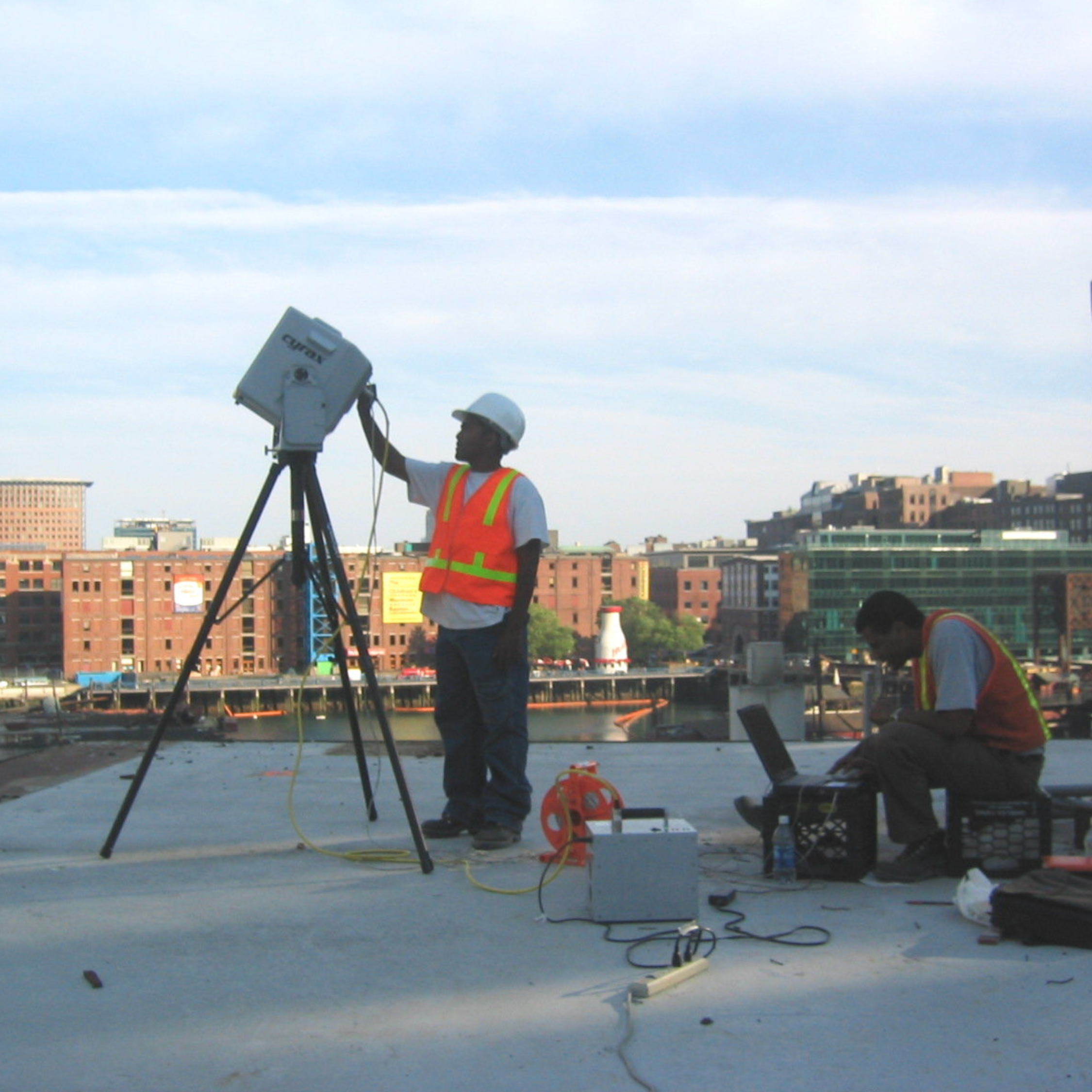
The DGT team first engaged with 3D laser scanning in 2002 through our work on the project, utilizing a project-owned Cyrax 2500 scanner for tunnel as-builts, bridges, portals, sign clearances, and material volume measurements. These applications that quickly demonstrated the efficiency and accuracy gains that scanning offered over conventional survey methods.
The experience of deploying this technology on one of the most complex construction projects in the country provided our team with direct, hands-on familiarity with both its capabilities and operational constraints, making clear that 3D scanning would only grow in relevance across the profession.
Deploying the Technology at 500 Atlantic Avenue
In 2003, we formalized our commitment to the technology by acquiring our own Cyrax 2500 and Riegl LMS-Z360i scanners. This was a strategic investment that positioned DGT as one of the first firms in the region to own and operate 3D scanning equipment in-house. By integrating 3D scanning directly into construction and survey operations, we unlocked faster turnaround, greater flexibility, and tighter quality control—capabilities that would prove essential on increasingly complex projects.
Among the first major projects to utilize our newly owned equipment was one rooted in familiar territory, the CA/T Vent Building No. 3 at 500 Atlantic Avenue on the Boston Waterfront, part of the same Big Dig infrastructure that had introduced our team to scanning just a year earlier. The CA/T system is supported by seven ventilation buildings distributed across the city, each designed to circulate fresh air into the tunnel network and exhaust stale air to the atmosphere.
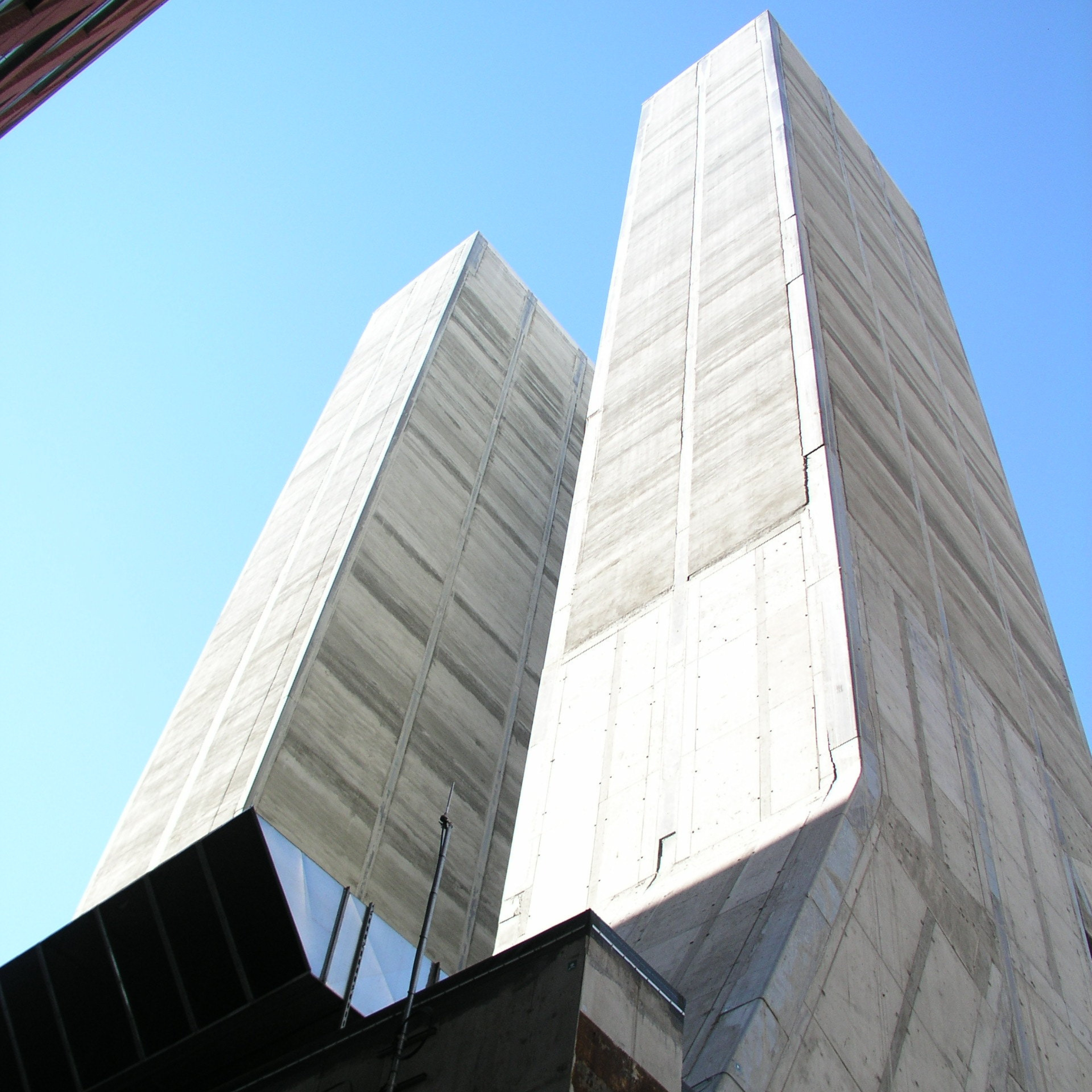
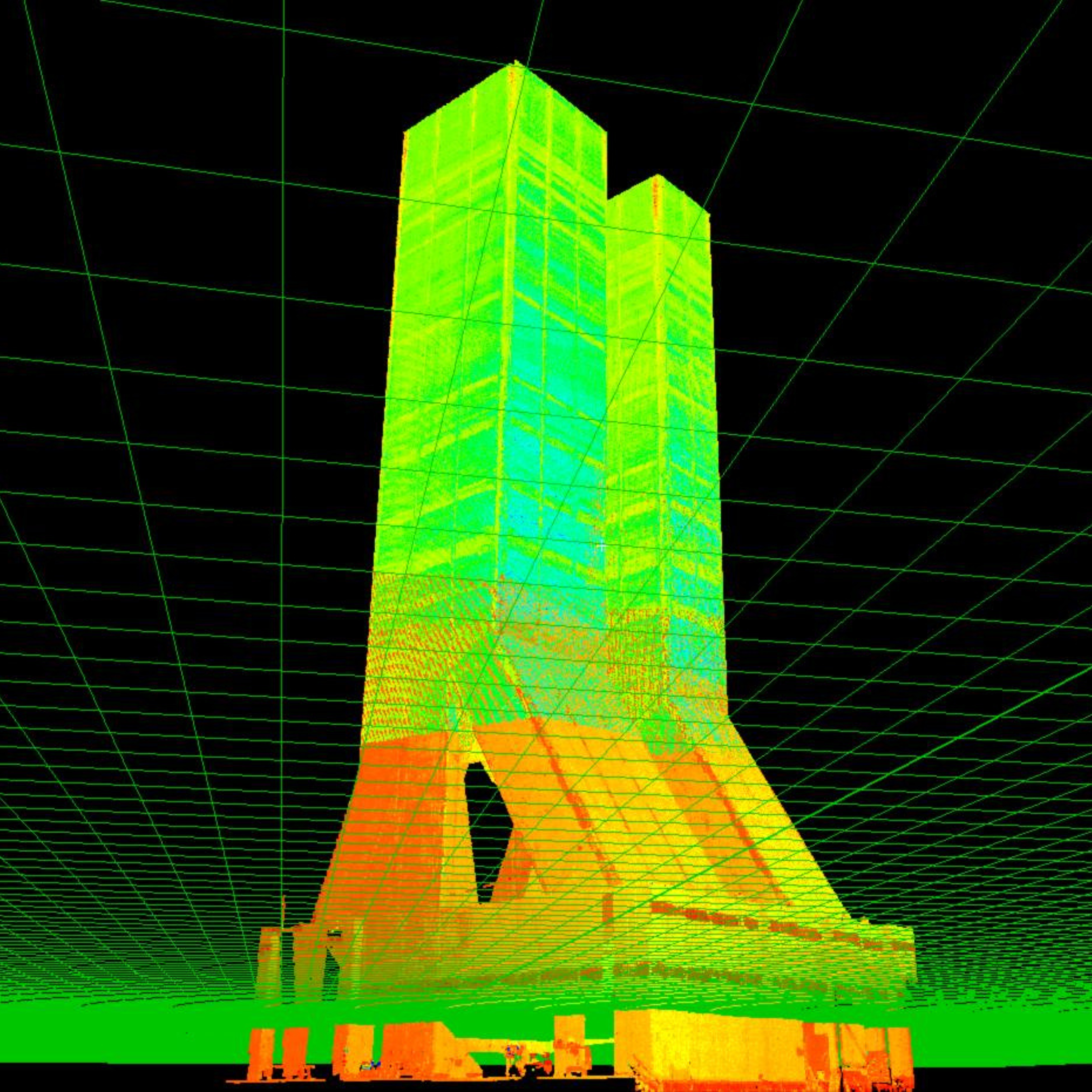
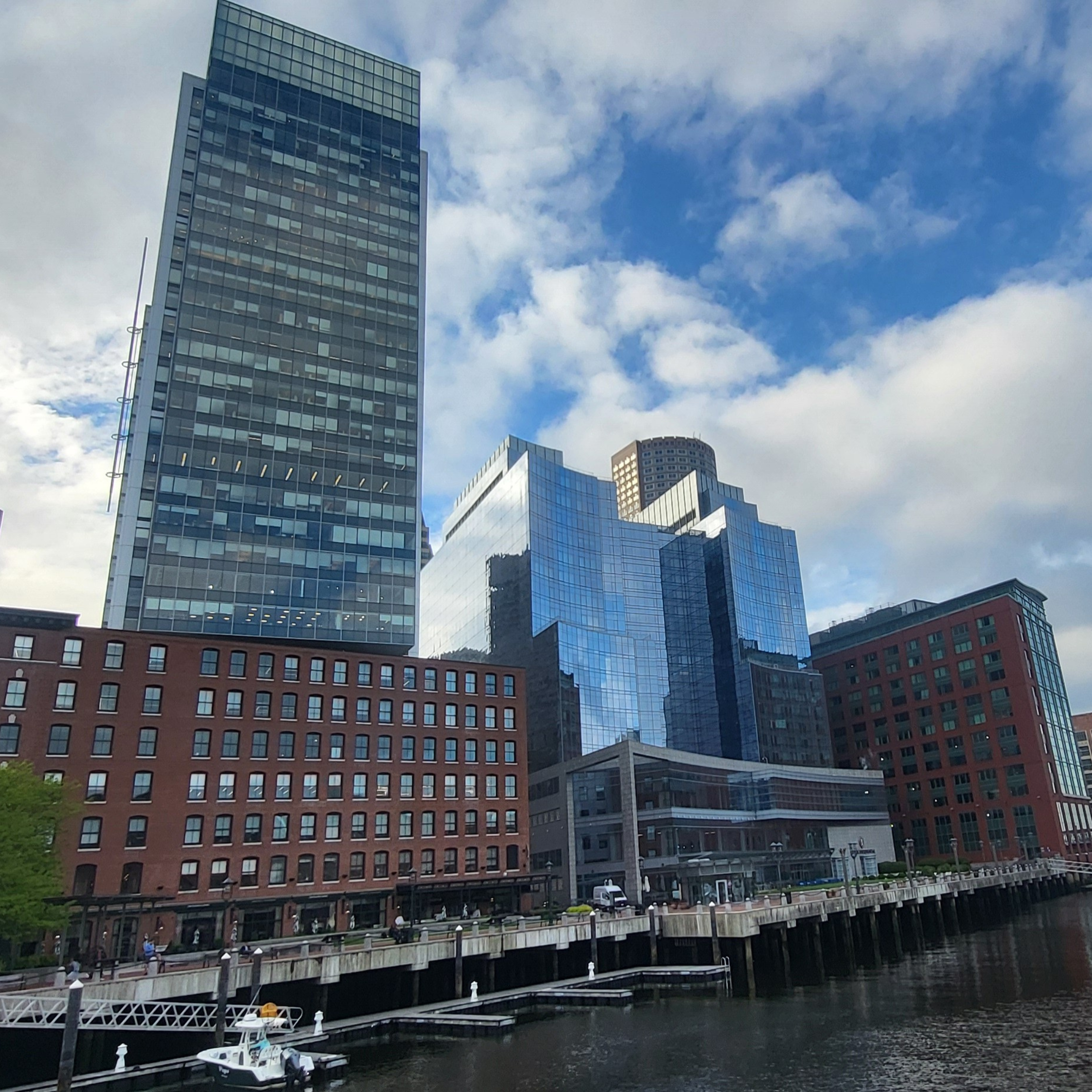
DGT was hired on the project to complete full exterior scanning of all four faces of the building’s exhaust stacks to support design of air-rights “wrap around” construction of the planned InterContinental Hotel, which was a 20-story development designed to completely conceal the stacks from both street level and aerial views. The exhaust stacks were free-standing concrete structures rising 240 feet above ground, spanning four faces: north, south, east, and west. Scanning coverage extended from the top of the base platform, approximately 30 feet above grade, to the uppermost sections of the structures. The combination of significant height, constrained site access, and strict accuracy requirements made this an ideal application for 3D scanning technology. Once complete, the building would fully enclose the stacks, ensuring hotel guests and condominium residents would have no visual, audible, or sensory awareness of the tunnel ventilation system within.
How We Did It
Getting quality data off a 240-foot structure requires more than good equipment, it requires deliberate planning, adaptive field execution, and disciplined quality management. To scan the north, east, and west faces, our field crew secured access to the rooftop of 470 Atlantic Avenue, the adjacent building. This elevated position provided optimal scanner placement for high-accuracy data collection across the upper sections of the stacks, with approximately two days of field operations conducted from this vantage point.
Scanning the south face required a creative approach to access, combining ground-level positions with elevated vantage points from the tops of the intake buildings to the south when conditions permitted.
Geo-referencing was established using CA/T project control coordinates provided prior to mobilization, integrating all scan data into the project’s existing coordinate framework. Quality control protocols were maintained throughout: a minimum of three targets were placed within each scan setup in accordance with manufacturer guidelines, independently discernible points on the stacks were verified against scan data using a prism-less total station, and field operations were suspended during adverse weather conditions, including wind, rain, or wet surfaces, to minimize noise and preserve data fidelity.
What We Delivered
Upon project completion, we provided the client with two primary deliverables:
- Excel Cut-Sheet Report which was compiled of XYZ coordinates at defined vertical intervals along the stacks, consistent with the referenced project plans.
- AutoCAD Drawing produced from points extracted from the scan-derived data, providing the client with an accurate geometric record of the structure.
Final results demonstrated an overall project accuracy of 1 sigma = 0.03 feet, meaning 68% of all measured points fell within less than half an inch of their true position. Verification checks confirmed lower stack points within ±0.02 feet and upper stack points generally within ±0.05 feet. The completed work met or exceeded all specified accuracy parameters.
Our scanning data served as the backbone of the structural engineering effort. By capturing precise XYZ coordinates across the vent stack perimeter at specified vertical intervals, our team gave the project’s structural engineers exactly what they needed to design a custom steel armature connecting the new building structure to the existing vent stacks, including the required vibration, noise, and odor suppression systems. The scans revealed deviations from the design location and pinpointed the positions of concrete structures and steel embed plates.
The 500 Atlantic Avenue project was more than a successful job completion. It was proof of concept that 3D scanning could deliver reliable, precise results on complex, large-scale structures under real-world field conditions. At a time when most firms in the region were still evaluating whether scanning was worth pursuing, we were already building a track record.
Built on a Foundation of Innovation
Since 2003, our 3D laser scanning capabilities have evolved steadily alongside our project portfolio, from buildings, renovations, and roof surveys to bridges, tunnels, underground vaults, manholes, and forensic investigations. What began as an early bet on emerging technology has expanded into one of our core service offerings, applied across some of the most complex and hard-to-access environments in New England.
That growth reflects a belief we’ve held from the start: investing in the right technology isn’t just good practice, it’s a responsibility to the crews in the field and the clients counting on accurate results. It’s a standard that drove our earliest decisions and continues to guide every investment we make today.
Learn more about DGT’s 3D scanning services.