

Project Spotlight: Building a Digital Twin of Plymouth Rock
Project Spotlight: Building a Digital Twin of Plymouth Rock
In the autumn of 1620, after sixty-six days at sea, the Mayflower reached the coast of what would become Massachusetts, carrying 102 passengers who had left England to start a new life. By tradition, the spot where they were rumored to have first stepped ashore is marked by Plymouth Rock, a granite boulder on the Plymouth waterfront that still draws more than a million visitors a year and remains one of the most recognizable landmarks in the story of early America.
Four centuries on, a small English village wanted to honor its connection to that story. Getting there started with a call to DGT.
A Call From Scrooby
In 2022, DGT received a call from Ed Marshall, then president of the Scrooby Parish Council, with a unique request. Scrooby is a village in north Nottinghamshire where the separatist movement behind the voyage first took hold, and home to several of the leaders who went on to shape the Plymouth Colony.
For the 400th anniversary of the Mayflower landing, the Parish Council wanted to create a lasting tribute to the village’s place in history. Their vision was ambitious: a full-scale replica of Plymouth Rock, cast in bronze and installed in the heart of the village. But first, they needed an exact digital copy of the original. That meant finding a team in America capable of capturing every contour of the historic granite boulder in precise 3D. After discussing the project with Ed, the DGT team signed on and donated its scanning services to help bring the project to life.
Capturing the Rock
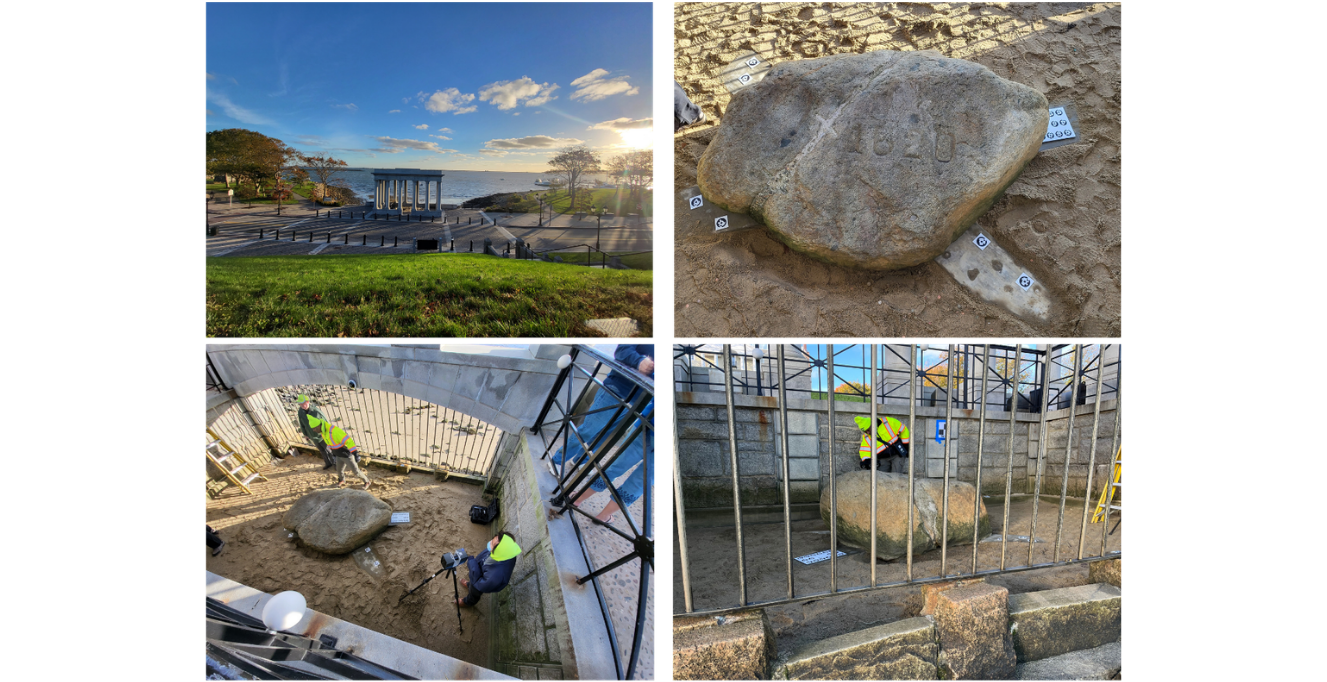
Plymouth Rock is managed by the Massachusetts Department of Conservation and Recreation, so the first step was securing an access permit from the organization. Once the permit was approved, DGT’s 3D scanning crew traveled to Plymouth to begin the work.
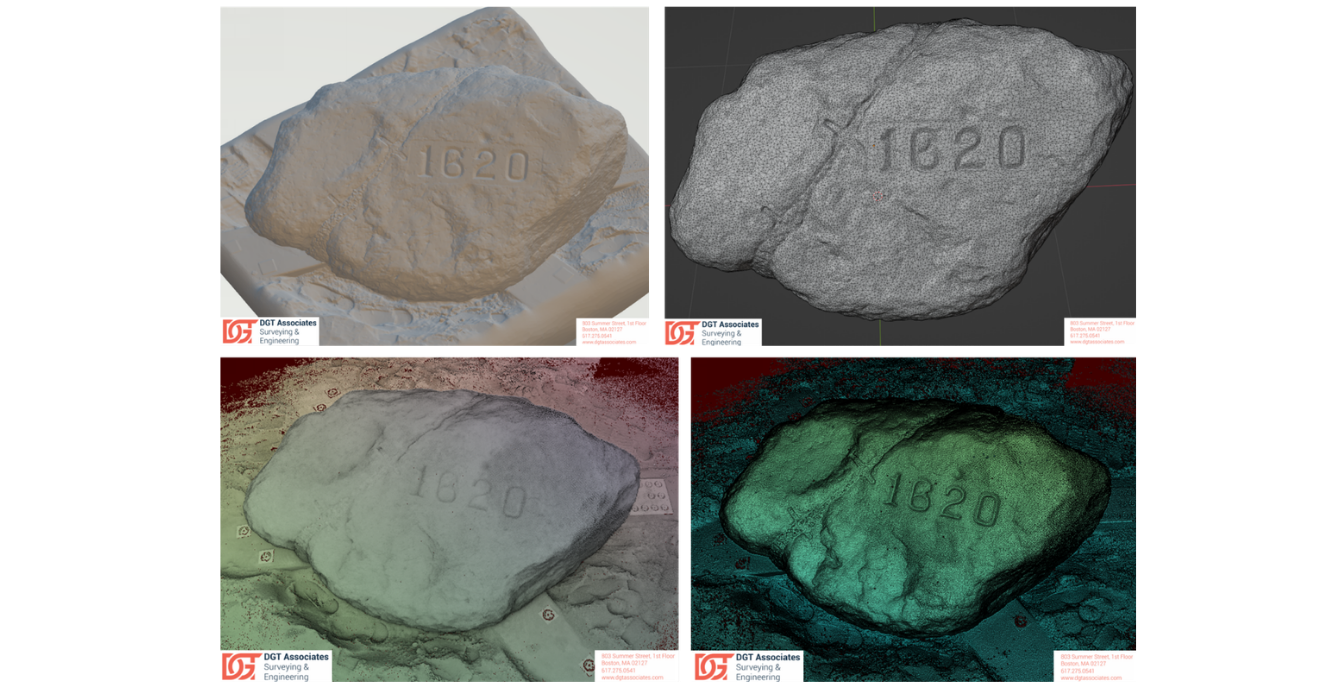
The rock sits below grade, sheltered inside a waterfront portico, which meant the team had to ladder down into the enclosure to reach it. Working from inside the structure, they used LiDAR, a remote sensing method that measures distance with pulses of light, to build a complete digital model of the boulder. The result was a highly detailed point cloud that preserved the rock’s shape and surface with remarkable accuracy, creating an exact digital model that could serve as the foundation for the bronze replica.
From Point Cloud to Bronze
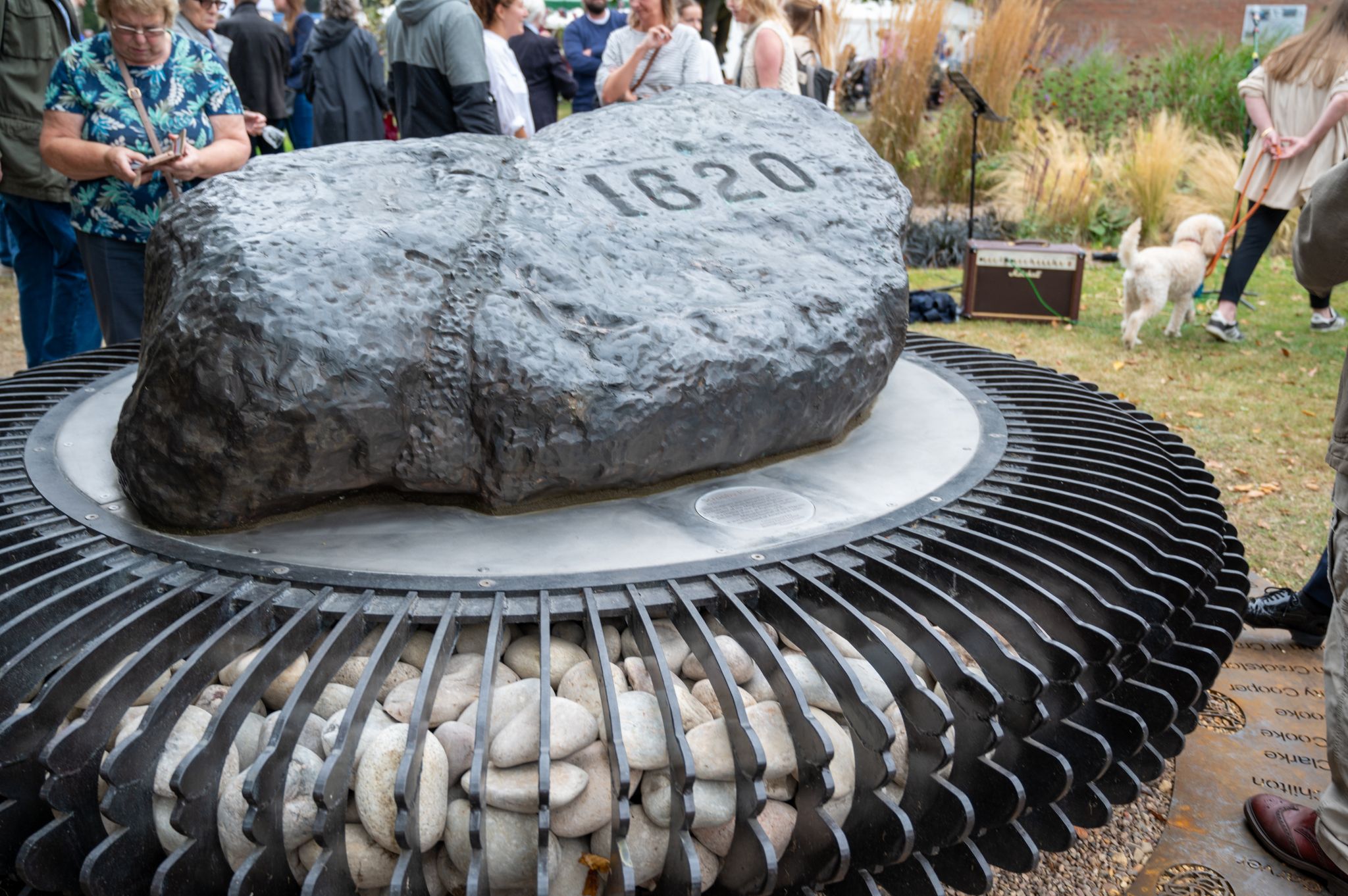
With the scans completed and reviewed, DGT delivered the data to British artist Michael Johnson, who used the model as the blueprint for the sculpture. What the team captured in Plymouth became the template for everything that followed. Using the 3D scan, mould sections were produced through 3D printing before being cast in bronze and assembled on a steel plinth. The finished sculpture, measuring approximately two by five meters, faithfully reproduced Plymouth Rock at full scale. Surrounding the replica, the names of all 102 Mayflower passengers were engraved, connecting the monument not only to a place, but to the people whose journey made it historic.
Like the original voyage it commemorates, the memorial was the result of many hands working together. A £37,400 grant from Nottinghamshire County Council helped fund the £60,000 project, with the remainder covered through local fundraising, sponsorships, and donated or discounted services from organizations on both sides of the Atlantic.
Honoring Two Histories
The memorial was intended to tell a broader story than the Mayflower voyage alone. Alongside commemorating the 102 passengers, it also recognizes the Wampanoag people, whose homeland became the site of the Pilgrims’ arrival. By bringing these histories together, the Parish Council envisioned the monument as a place for reflection, remembrance, and learning for generations to come.

For DGT, it was an opportunity to contribute to something built to endure. It’s not every day that a 3D scan becomes part of a monument with centuries of history behind it. What began as millions of laser measurements on the Plymouth waterfront ultimately became a permanent tribute in an English village more than 3,000 miles away—a reminder that technology can help preserve not only places, but the stories they carry.
Learn more about DGT’s 3D scanning services.